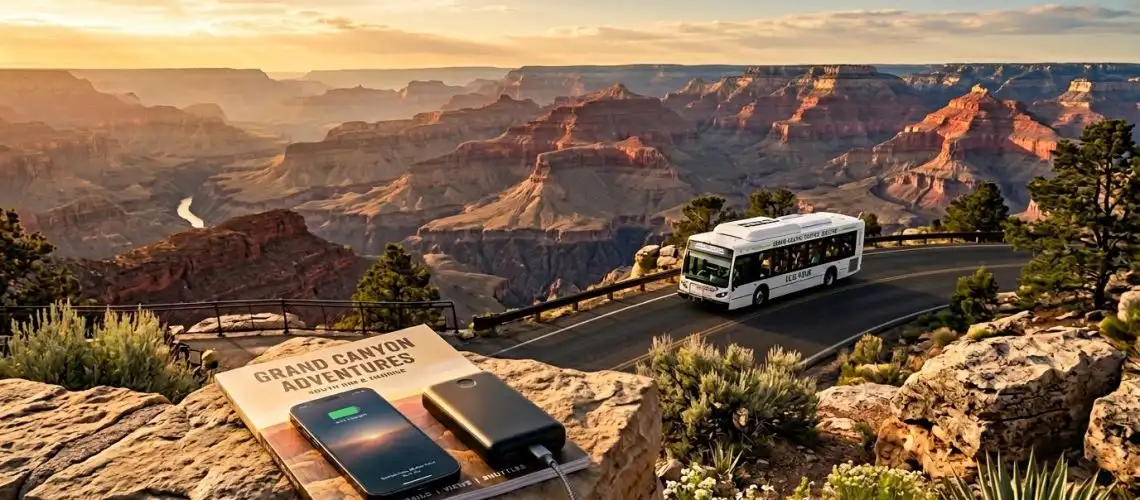
A good Grand Canyon itinerary is usually quieter than people expect. It does not try to win by adding more stops, more detours, or more proof that the day is “worth it.” It wins by protecting the main experience. The canyon needs room to breathe. If the schedule only feels exciting because you are imagining the highlights and skipping the transfers, it is probably overbuilt already.
One clear main objective
Best when the canyon itself is the star and the rest of the day stays secondary.
A route-aware version of “one day”
Works only when the route and rim are honest fits for a longer Vegas-based day.
Slower pacing over forced density
Best when you want the day to feel like travel instead of schedule management.
What a Good Grand Canyon Day Actually Looks Like
A strong itinerary gives the main experience enough space to land. That means fewer unnecessary side missions, fewer fantasy stop lists, and more respect for the time surrounding the canyon. Good itineraries usually feel a little restrained on paper and much better in real life. Weak itineraries usually feel impressive on paper and much more frantic once the day begins.
When an itinerary is strong, the canyon feels like the day. When it is weak, the canyon feels like one item fighting for attention inside the day.
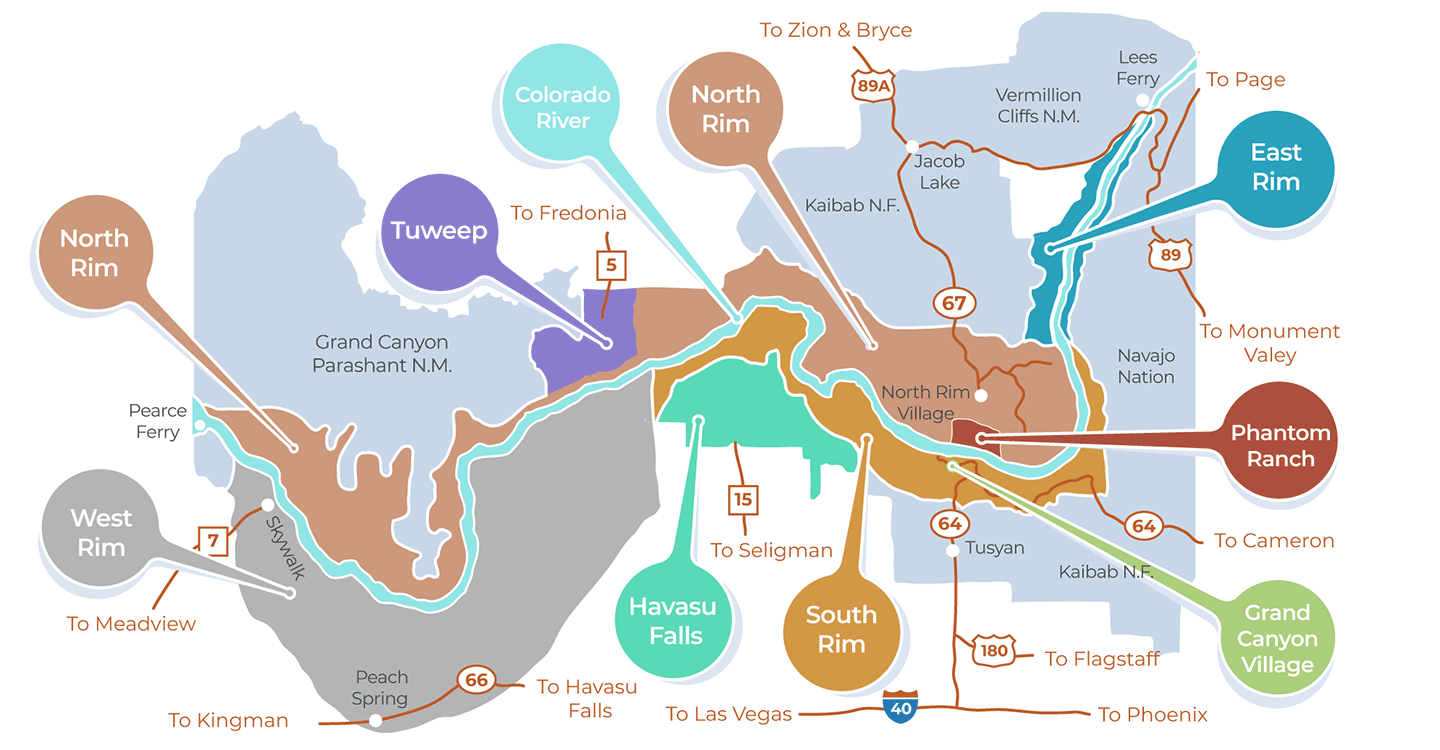
Three Itinerary Shapes That Actually Make Sense
Most travelers do not need an endless list of sample plans. They need to recognize which type of day they are building. A focused day works when the route is reasonable and the canyon is the clear priority. A Vegas mission day can work, but only if you choose the right rim or format and resist the urge to overdecorate the schedule. A slower itinerary works when you want better pacing or already know that one dense day will leave the group tired and underwhelmed.
- A focused day is usually the smartest starting point for first-time planners.
- A Vegas-origin day needs stricter editing than an Arizona-based day.
- A slower plan is not “doing less.” It is often how people preserve the quality of the trip.
How People Overbuild the Day
They mistake variety for value
The day gets packed with additions that sound useful but gradually steal energy and attention from the canyon itself.
They ignore the route until it is too late
Itinerary logic collapses when departure city and rim were not settled first, especially on Las Vegas plans.
They build for best-case conditions only
A tight schedule that only works if everything goes smoothly is not a strong itinerary. It is a fragile one.
They try to prove the trip was worth the effort
This often leads to stop-stacking and schedule inflation instead of a cleaner, more memorable day.
How to Build an Itinerary in the Right Order
Lock the starting logic
Decide the departure city and accept what that means for the day before you plan anything decorative.
Choose the rim or format
South Rim, West Rim, and air create different itinerary shapes. Until that is fixed, the rest is guesswork.
Protect the day from ambition
If the itinerary is already dense on paper, simplify it before booking rather than hoping momentum will save it.
Use weather and timing as refinements
Conditions should shape pacing and expectations, not be asked to fix a route or structure problem you ignored earlier.
Where to Go Next
If the schedule still feels unstable, the issue is usually elsewhere. It may be a Vegas route problem. It may be a day-count problem. It may be a weather reality problem. Fix that constraint first, then come back to the itinerary once the structure is strong enough to support it.
Grand Canyon from Las Vegas
Go here when the itinerary still depends on a Vegas-origin route decision.
How Many Days for Grand Canyon
Go here when the day still feels overloaded and you may need more time.
Grand Canyon Weather
Go here when conditions may change how ambitious the day should be.
Grand Canyon Tours
Go here once the itinerary shape is settled and you are ready to compare products.